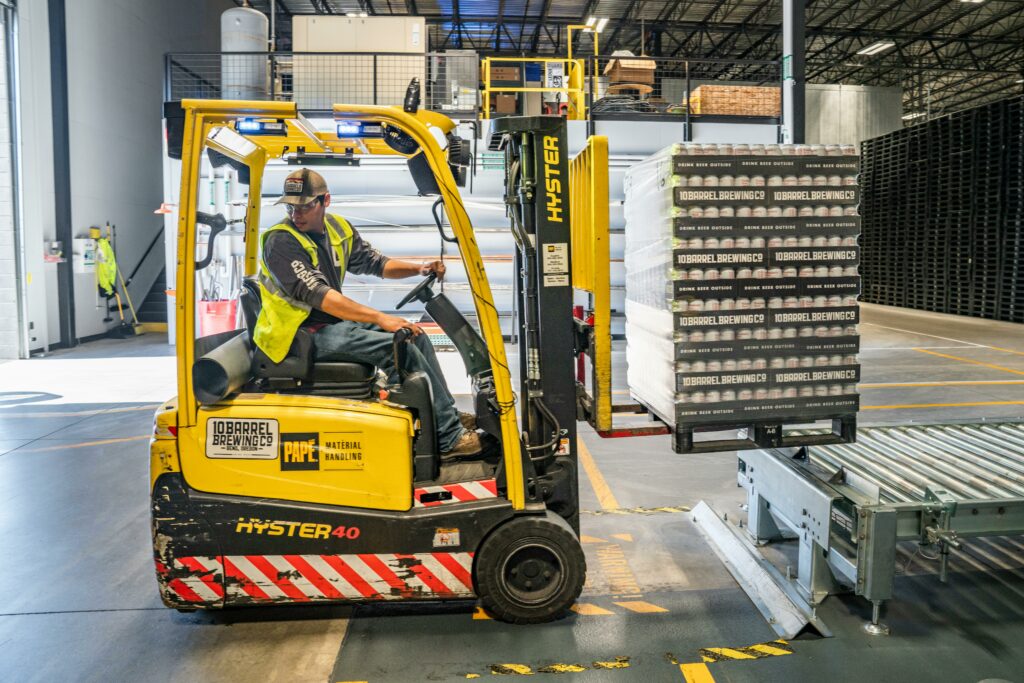
What industrial trucks are there and how do they differ?
Whether in the warehouse, in production or in logistics: in many areas, nothing works without industrial trucks. What types of forklift trucks are there, what are the differences between the individual forklift truck types - and which driving licenses are required? Find out all this and more in this article!
Table of contents
Estimated reading time: 6 minutes
Where are forklifts used?
Forklift trucks are versatile industrial trucks. They are used wherever heavy loads need to be lifted, transported and stacked. The range of applications for forklifts therefore includes, for example logistics,the warehouse, the production sectorthe transportation of goods in Industrial companies and construction sites.
The type of forklift used differs depending on the requirements and task. In order to identify the right type of forklift, it is therefore important to have an overview of all forklift types.
What types of forklift trucks are there and what are their special features?
1. lift mast truck (forklift truck)
With the lifting mast or forklift is an all-purpose industrial truck that can also be used for less heavy loads. This means that the mast lift truck is widely used in trade, commerce and industry.
2. container stacker
The large container stacker specializes in lifting and moving ISO containers and is therefore characterized by its very high load capacity and reach. It is used in ports and logistics centers.
3. order picking forklift
This type of forklift was developed for picking goods in rack warehouses. There are various designs for different rack heights, meaning that this type of truck can be used in almost any warehouse.
4. tractor
Tractors have high tractive power and maneuverability and can therefore be used optimally for internal transport over short distances.
5. reach truck
This type of truck was specially designed for narrow spaces or aisles and high lifting heights in warehouses. Thanks to its high maneuverability and stability, the reach truck is ideal for use in high-bay warehouses.
6. telescopic forklift
Thanks to their extendable telescopic arm, the large telehandlers have a long reach and lifting height. This makes them versatile, for example on construction sites or in agriculture - also thanks to their large tires.
7. heavy-duty forklift truck
As the name suggests, the heavy-duty forklift truck was developed for transporting particularly heavy loads. Its load capacity far exceeds that of standard forklifts. The robust design and powerful engines allow it to be used in heavy industry, port handling and wherever smaller forklift types reach their limits.
8. rough terrain forklift
The rough-terrain forklift is ideal for use on uneven terrain, for example on construction sites or farms. Its large tires with deep tread and stable design make this possible.
9. sideloader
This type of forklift is used for transporting long loads (e.g. pipes, wood and steel) - especially in narrow aisles. It is mainly used in the timber and steel industry and whenever long loads need to be transported in confined spaces.
10. stand-on forklift truck
Finally, there is the stand-on stacker type. As the name suggests, the driver stands instead of sitting while operating the truck. The compact design and the mobility of the driver make the stand-on stacker suitable for use in confined working areas, for example in small warehouses.
In addition to the forklift types mentioned here, there are other types, such as four-way forklifts, multidirectional forklifts and truck-mounted forklifts. However, presenting all forklift truck types in detail would go beyond the scope of this article. You have now got to know the most important ones.
Which driving licenses are required for forklifts?
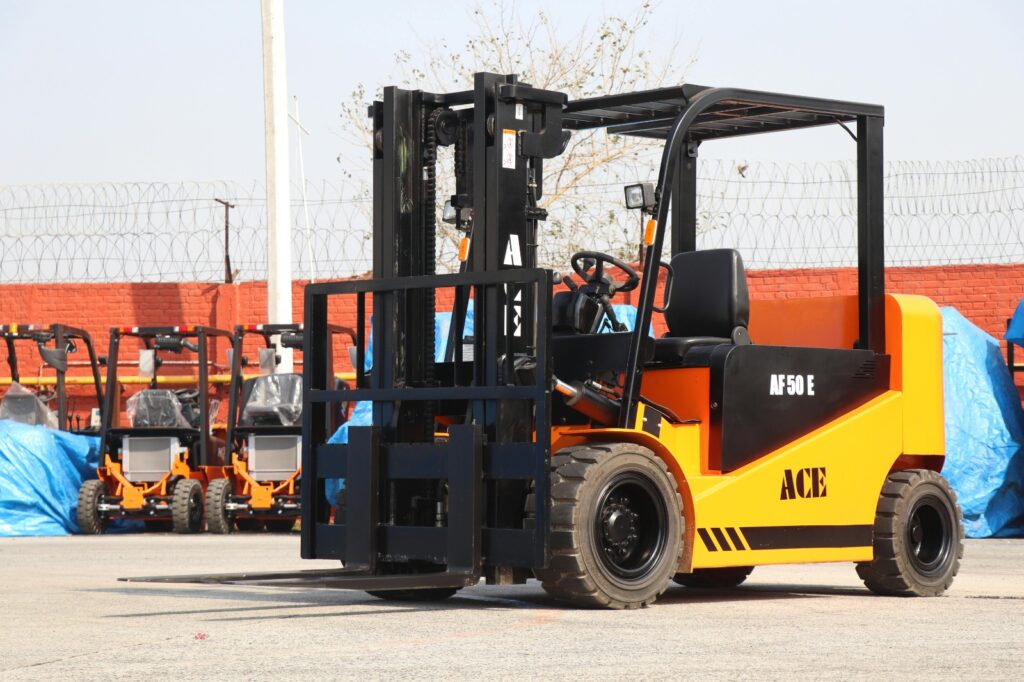
As for all other industrial trucks, an industrial truck license is also required to operate the types of forklift mentioned above. This type of license is also known as a forklift license. Depending on the type of forklift, an additional qualification may also be required. More detailed information can be found in the DGUV publications, for example in "Qualification and commissioning of drivers of industrial trucks other than all-terrain telescopic forklifts" or in the "Accident prevention regulations for industrial trucks„.
How do I find staff to operate forklift trucks?
Operating forklifts requires skilled personnel with the right driving license. However, finding this personnel is a major challenge for many companies in Germany due to the shortage of skilled workers.
Fortunately, there is a solution that allows companies to obtain skilled workers quickly and easily - and thus remain capable of acting at all times despite the shortage of skilled workers. We are talking about temporary work (also known as agency work or Temporary employment known).
This is a personnel solution that is characterized by its high degree of flexibility and cost efficiency. As part of temporary employment, your company hires the required specialists from another company for a specific period of time.
We are a personnel service provider that has specialized in temporary employment for many years - especially in temporary employment from Eastern Europe. We help German companies from all sectors to find qualified forklift truck drivers and warehouse personnel from Eastern Europe such as Poland, Romania or Hungary.
We are also happy to help you find personnel to operate forklifts. If you have any questions on the subject, or if you would like to know how we can help you, please contact our team!
Similar topics