How are production workers used in the manufacture of medical devices and in the pharmaceutical industry?
- How are production workers used in the manufacture of medical devices and in the pharmaceutical industry?
- What does the pharmaceutical industry do?
- What tasks do production employees perform in the medical device and pharmaceutical industry?
- What tasks do production assistants perform in the pharmaceutical industry?
- What activities do production employees carry out in the assembly of medical devices?
- How are production employees deployed in the filling of medicines?
- How are production employees deployed in packaging for the medical device and pharmaceutical industries?
Estimated reading time: 21 minutes
What does the pharmaceutical industry do?
The manufacture of medical devices and pharmaceutical production as a whole is an area that involves the development, manufacture and marketing of medical products and medicines. This area of industry is therefore an important basis for healthcare. Employees here produce a wide range of devices, technologies and medicines for this purpose. These are used to prevent, diagnose and treat diseases, whether in hospitals or on an outpatient basis.
Medical devices are all devices that are used for medical purposes with regard to humans. However, they themselves have no immunological, metabolic or pharmacological effect. These can include X-ray machines, glasses, dentures, implants and pacemakers. Without these, a large number of diseases cannot be diagnosed or treated.
The pharmaceutical industry, on the other hand, is the sector in which companies develop drugs. They are also responsible for the production and marketing of medicines. This includes finished medicines as well as vaccines and prepared blood. The pharmaceutical industry thus makes a very important contribution to the treatment of diseases and also to improving people's quality of life.
The medical devices sector and the pharmaceutical industry are interlinked. They both serve to supply the healthcare sector with everything it needs. However, they are not one and the same. Both areas are subject to different regulations. This is also due to the fact that medical devices, for example, are primarily used by professionals, while absolute laypersons take the medicine and therefore have to be able to rely on the industry.
What tasks do production employees perform in the medical device and pharmaceutical industry?
Production employees in the medical device and pharmaceutical industry are entrusted with the task of manufacturing the products and paying strict attention to quality. This includes medical devices as well as medicines and various consumables, such as disposable masks.
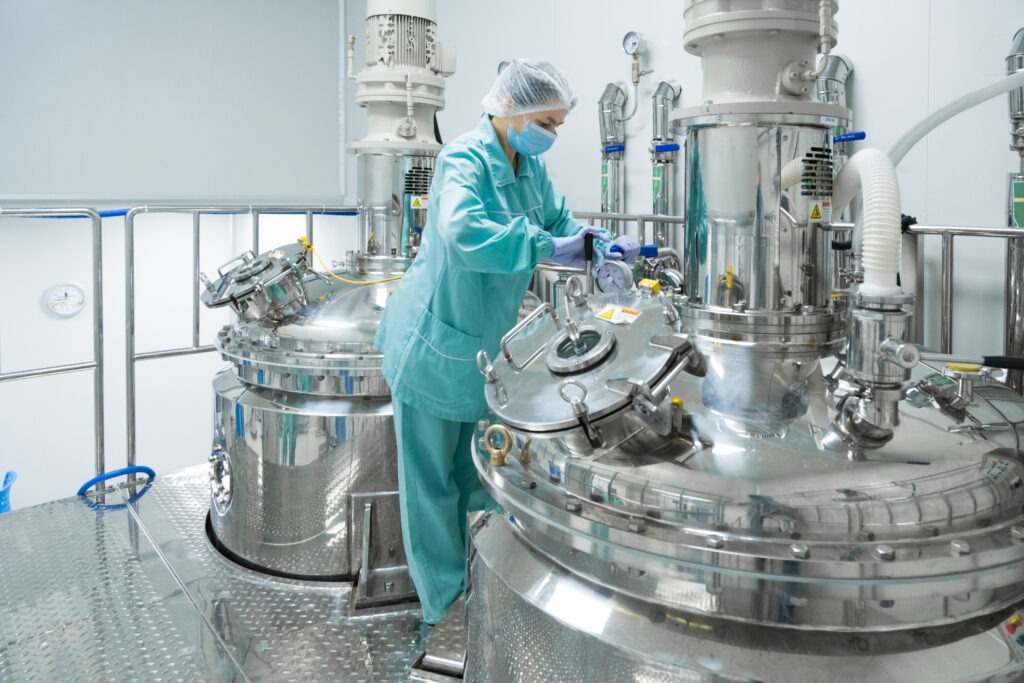
- In manufacturing it is the production employees who operate machines. They carry out the production processes themselves. They ensure that everything runs efficiently and safely. If necessary, they intervene to prevent errors or rectify faults. They program and operate the systems and also maintain and clean them.
- In Quality control, production employees are responsible for finding faults and defects. They identify the causes and ensure that they are eliminated. They also make suggestions for optimizing the processes. They prepare reports on the errors and faults and the measures taken to rectify them so that the events can be traced later.
- The production employees produce finished documents . They use this to record the processes and settings. They also describe opportunities for improvement and the measures taken to eliminate faults. This enables other employees to retrace and reproduce the work steps at a later date.
At work, employees are also tasked with ensuring compliance with the rules. This helps to prevent accidents during production. They also ensure that the devices and medicines ultimately comply with the specifications and are therefore suitable for the desired use or have the desired effect.
What are the requirements for employee skills and quality standards in the pharmaceutical industry?
Due to the higher demands on quality, there are also higher demands on skills and qualifications.
- This is how an apprenticeship in a relevant field is required. This could be training as a pharmaceutical technician, for example. Medical technology mechanics and production specialists are also welcome.
- Furthermore, good language skills a mandatory requirement for working in the medical device and pharmaceutical industry. The first requirement is that German must be spoken and understood well. All documentation is in German. The rules are also written in German and the same applies to prescriptions for medicines.
- In many areas, there are also good knowledge of English is in demand. This is an international industry and that also means that a lot of information and results are primarily available in English. Specialists must therefore also be able to understand and apply these.
Is quality awareness a prerequisite for working in the pharmaceutical industry?
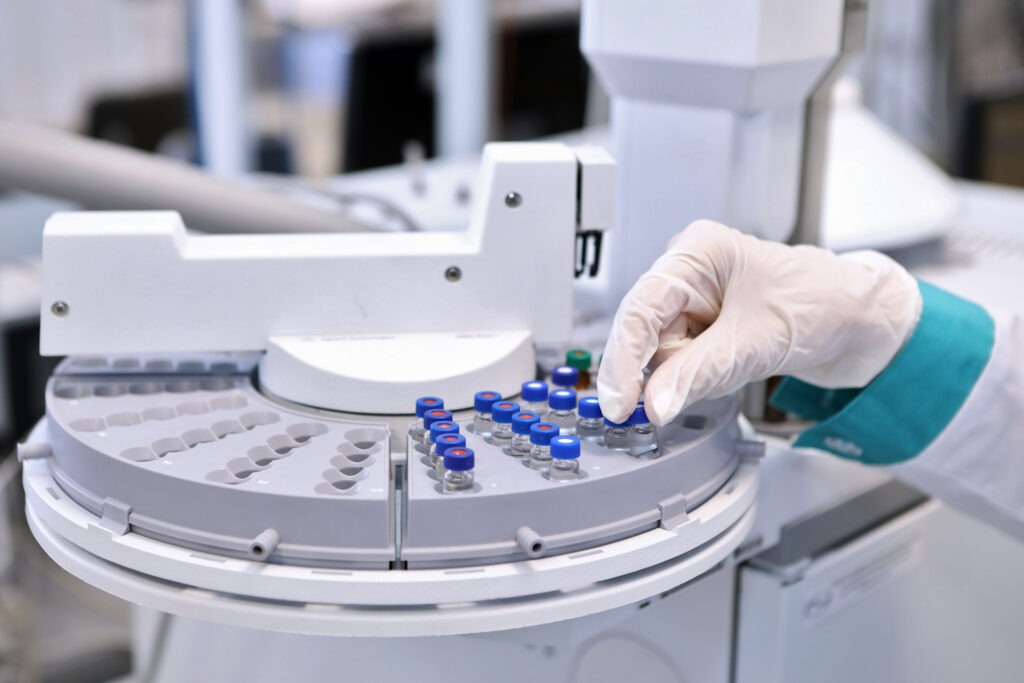
Another indispensable prerequisite is a high level of quality awareness. When it comes to medicines, even the smallest deviations can have undesirable consequences. Imprecise work on the devices can also make their subsequent use much more difficult. Therefore, work here must be very precise. Errors must also be detected as early as possible so that they do not first become apparent to the customer.
In addition, as is so often the case in production, the willingness to work shifts. Many companies work in shifts and even those that do not can switch to shift work at any time depending on the order situation. This also means that work has to be done at weekends and on public holidays. Overtime is also required if the need arises.
What are the typical professions in the pharmaceutical industry?
Typical professions in the pharmaceutical industry are pharmaceutical technician, production technician, medical technology technician and industrial mechanic. Pharmaceutical technicians produce medicines. These include tablets, for example, but also syringes and solutions.
Production specialists monitor the machines used in production. They also carry out quality assurance and create documents relating to the results found.
Medical technology mechanics manufacture devices that are used in medicine. These include implants, for example, but also devices for diagnostics, such as X-rays, or for therapy, such as infrared radiators.
Industrial mechanics, on the other hand, operate the systems and machines that carry out production. They maintain them and repair them if necessary. They program the machines and make adjustments if the desired result requires it.
What tasks do production assistants perform in the pharmaceutical industry?
Production assistants work in various areas. Their tasks make an important contribution to the work of the main production processes. The activities vary depending on the company and the area in which the production assistants work.
If they are used in the production of medicines, they support the production of tablets and the mixing of solutions, among other things. To do this, they monitor the machines in this area. They weigh the ingredients. They then mix and press the tablet masses. They also help with filling and packaging.
- In capsule production the production assistants help to fill the capsules with the active ingredients. They monitor the closure of the capsules and are also involved in the packaging process.
- With the powder production the production assistants are busy weighing them. They mix them and fill them according to the recipes. They use cans, bags and other containers for this.
- When it comes to the production of liquids, then the production assistants support production here with filling. They monitor that the correct quantities are placed in the correct bottles and ampoules. They also take care of labeling.
What do production employees do in the packaging of pharmaceuticals?
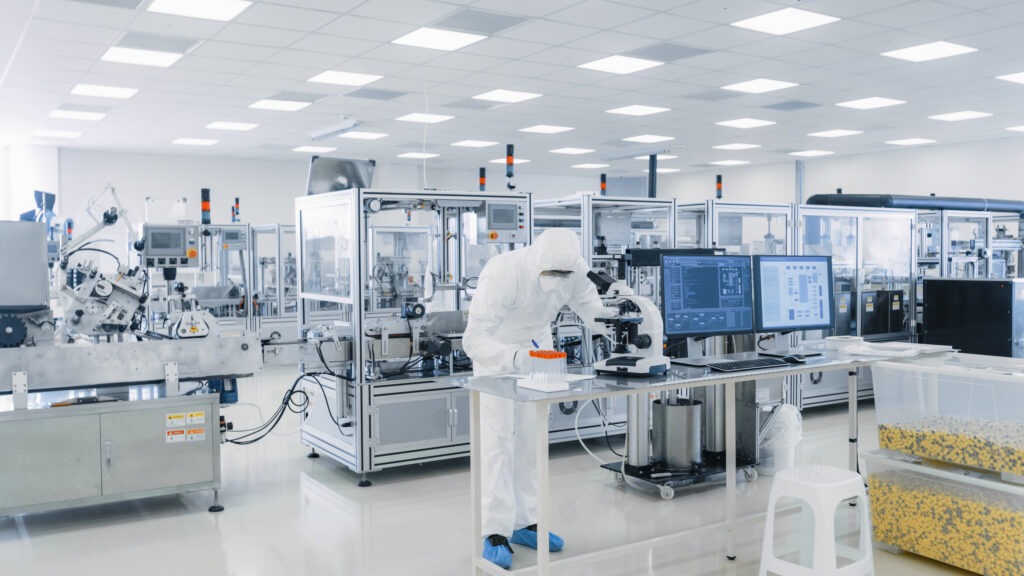
As part of the packaging process, production assistants are responsible for primary and secondary packaging. As part of the primary packaging they are responsible for ensuring that the vials and ampoules are filled with the correct quantities. These must also be placed in the correct packaging.
In secondary packaging the production assistants put the packaged medicines into cartons. They also add the package inserts. They also carry out other tasks in preparation for dispatch.
As part of the packaging process, it is also the production assistants who check that the right medicine is in the right packaging. They are also responsible for checking the labeling and package inserts.
What tasks do the production employees perform during sterilization?
In sterilization and aseptic production, the production assistants take over the sterilization processes. This is done as part of the production of solutions, for example for vaccinations or infusions. They also clean the equipment and operate the systems used to sterilize the tools.
- In aseptic filling In turn, the production assistants work with the special filling systems that allow sterile production. They ensure that the products are not affected by contamination.
- When working with injection technology and infusion products the production assistants perform tasks related to the filling of injection solutions into ampoules and vials. They are also responsible for vacuuming and packaging.
They are also involved in the packaging of syringes and infusions. They have to label them accordingly. They are also responsible for packaging the associated syringes and cannulas.
Are they also involved in research and development?
Production assistants can even be found in research and development. They support the specialists in optimizing the production processes or in the process development itself. They also help with the manufacture of prototypes and the production of small batches. They also work in laboratories for this purpose. Here they help to prepare the materials for the experiments. They document the experiments and record the results.
As part of the overall production process, the production assistants are also responsible for cleaning and maintenance. This means that they clean the production facilities. They disinfect them where necessary. They also clean and disinfect the equipment and production areas, ensuring that high hygiene and quality standards are maintained. In some cases, production assistants also support the maintenance and repair of equipment and machines.
What do the production assistants do in storage and material handling?
Production assistants can also be found in storage and material handling. When it comes to storing raw materials, production assistants are responsible for receiving them. They are also responsible for storage and provision. The same applies to auxiliary materials and packaging materials.
The production assistants are also responsible for transporting materials. This means that they take the products and the various materials to where they are properly stored or needed.
This also falls under the area of logistics and shipping. This means that the production assistants are responsible for order picking. They also handle the processing of orders and the preparations required for shipping.
Finally, they are also responsible for stock control as part of logistics. This means that they check what the stock looks like and organize the supply of materials that are used for production.
Production assistants are also employed in quality control and quality assurance. They take samples of raw materials, for example, but also of intermediate and end products. They then help with the tests and subsequent analysis. They also carry out visual inspections, for example during the final inspection. This enables them to find defects, so that they are also able to detect defects such as damaged ampoules and rectify them.
What activities do production employees carry out in the assembly of medical devices?
Production workers for the assembly of medical devices are tasked with manufacturing certain medical products. To do this, they assemble components and join them together. In doing so, they work responsibly and precisely. Of course, they also check whether the finished products meet the specifications and whether they have the desired functionality.
No training is required for this work. Rather, manual skills and a high awareness of quality are required. Nevertheless, training in a technical or manual field helps you to get a good job and a better income.
The main tasks can be summarized simply. In addition to the assembly and control activities mentioned above, employees are also constantly familiarizing themselves with new products and processes. They work as a team, so they need to have the appropriate interpersonal and communication skills.
The production employees also clean the workstations and equipment they use for assembly. They prepare documentation on the work they have carried out and the results achieved.
Production employees also need basic computer skills. Assembly instructions often come as software. They also create the documentation with the relevant programs.
How are production employees deployed in the filling of medicines?
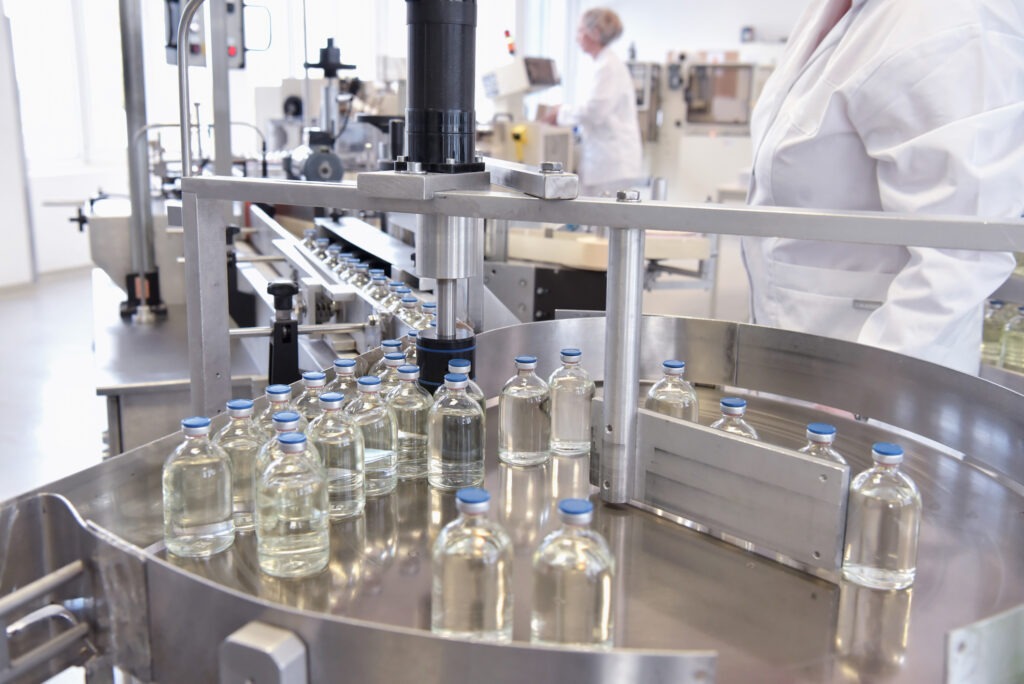
Production employees in the filling of medicines are primarily tasked with operating the filling systems. They set them up correctly and monitor the processes. If necessary, they intervene and make adjustments. The machines are then used to fill the tablets, capsules or syringes with the active chemical ingredients. The production employees also load the systems for this purpose. They clean them and disinfect them. They also help with maintenance and set up clean rooms.
As part of quality control, the production staff check the filling process to ensure that the standards are met. This means that it is important that the right products are filled in the right mixture and the right quantity. With the often small doses, very precise work is indeed required here, as even the slightest deviations can have unexpected effects after ingestion.
It is equally important that no impurities get into the tablets, capsules and syringes. The production staff therefore set up clean rooms and work to the highest hygiene standards in all areas.
They must be able to follow the instructions of their superiors. They also work in a team, so a willingness to cooperate is required. In addition, they must have a heightened awareness of quality in order to avoid even the smallest errors. Finally, production employees must also be able to operate machines or learn how to operate them.
In terms of working conditions, it can be said that these go far beyond the usual production standards. There is also shift work with assignments at night and at weekends. More importantly, however, the work takes place under high hygiene standards and often in clean rooms, which have their own requirements. In addition, there are strict safety guidelines that must be known, understood and followed.
How are production employees deployed in packaging for the medical device and pharmaceutical industries?
Packaging production workers are responsible for operating the machines and equipment used to carry out the packaging process. This is done under constant supervision and in compliance with safety and hygiene regulations.
Specifically, this includes operating the machines for assembling, packaging and labeling. Checks are carried out during ongoing processes so that any deviations can be detected immediately and action taken. This involves checking whether there are any defects in the medicines or medical devices. This is done visually and by taking samples.
The production employees also maintain the accompanying data. This means that they record which products were manufactured when and when they were packaged. They also document the dispatch.
To achieve this, the production assistants working here have to work with precision. They can only meet the quality standards with a high degree of accuracy and care. They must also have sufficient technical understanding to handle the systems and machines.
They must be able to use computers and have a good command of German. This enables them to understand the instructions correctly, work together with the team members and check the labeling and package inserts.
Various types of packaging are used for medicines. This starts with the familiar blister packs. These contain capsules and tablets as shrink-wrapped individual doses.
There are also bottle shapes, making them particularly suitable for liquid medicines. Medication that is packaged as a powder, on the other hand, comes in sachets or tablets. Other liquid medications are filled into sterilized ampoules. Some medications are also packaged directly as liquids in individual syringes or pre-filled syringes.
How are production employees deployed in quality assurance in the medical device and pharmaceutical industries?
The aim of quality assurance in the pharmaceutical industry and the manufacture of medical devices is not only to avoid or reduce waste, optimize processes and increase customer satisfaction. It is also important that the medicines and medical devices are safe for patients. In addition, they must have the specific functions or effects so that their use produces the desired results.
In other words, health and even lives are at stake here. Improperly functioning equipment, for example, can falsify a diagnosis or threaten the life of a patient with a pacemaker. Medication in insufficient quantities or dosages may not be enough to quell an illness. With the wrong ingredients or contamination, they can cause new ailments or even lead to the death of the patient.
What is important for quality assurance?
So when it comes to quality assurance, it is important that production employees are constantly aware of the importance of their work. From the procurement of raw materials to every step in the production chain and the final product in the packaging, everything must be done correctly. Quality assurance is there to ensure this.
There are also separate guidelines for this, the GMP. This stands for "Good Manufacturing Practice". These guidelines deal with every aspect of the manufacture of medicines and must be followed at all times.
Quality assurance begins with the testing of the raw materials. These must have the required properties to allow processing and to provide the effect in the mixture that is necessary to ultimately help the patient. To this end, the raw materials are inspected and analyzed with samples.
The manufacturing processes are checked to ensure that they are carried out correctly. It is important here, for example, that environmental conditions such as pressure, temperature and liquid content are maintained. The environmental conditions must also be maintained as required for the required time, such as the targeted heating of the active ingredients.
This is followed by the final product test. This means that random samples of the finished medicinal products are tested to ensure that they comply with the formulation specifications and can deliver the effects expected of them.
What are the requirements for the documentation of results?
All checks are documented. This records all processes, their time, the conditions, the type of procedure and the results. It is important that every step can be traced back.
In addition to the aforementioned patient safety and efficacy, trust is also important. Doctors only prescribe medicines that they are confident will work. Patients also only take medicines that they expect to produce good results.
There are also legal requirements. It is prescribed who controls the medicines and in what way. Given the nature of the use of medicines, negative effects can quickly have very expensive legal consequences. This includes claims for damages and even criminal charges if gross negligence is involved.
This makes quality assurance extremely demanding. To meet these requirements, the production staff use various methods in quality control. These include titration, for example. This is an analysis used to determine which substances are present in the medication and in what concentration. This enables them to determine whether the specifications have been adhered to during production and, above all, whether the formulations have been followed.
What is quality assurance?
In addition, there is quality assurance and packaging. Many chemical agents are active. This means that they react with each other and with the environment. However, this changes their effectiveness, which can prevent them from being used successfully in treatment and may even entail risks of its own. For this reason, the production staff use stability testing to check how long the medication lasts without reacting with itself or a substance from the environment and thus changing its composition.
Of course, the production employees in quality assurance also check the packaging, especially of the medicines. This serves to ensure that environmental influences are kept out and that the active ingredients cannot react with other substances. It is therefore important to ensure that the packaging is sterile, for example, and that the medicines are sealed airtight.
Another aspect of quality control is storage. If the medicines are stored at the producer or distributor, this must be done in such a way that their effectiveness and quality are not impaired. To this end, the production staff check whether the necessary precautions have been taken, for example cool storage without exposure to sunlight.
Conclusion
In the medical device and pharmaceutical industry, production employees perform a wide range of tasks. These include receiving raw materials, loading and operating machines for production, filling and packaging, as well as shipping and warehousing.
The individual activities range from simple tasks such as cleaning equipment to demanding tasks in research, when new drugs or new medical devices are developed and tested. Here, the production employees work in the laboratories, set up clean rooms and program the systems with which the new formulations and devices are manufactured.
Quality assurance hovers above all of this. In addition to customer satisfaction and compliance with quality standards, this serves above all to ensure patient safety and maintain the effectiveness of the medicines. It therefore has a special role to play. To this end, it checks the medicines for the content of ingredients and their stability so that it can be determined whether they can ultimately provide the desired effect.
Related topics: