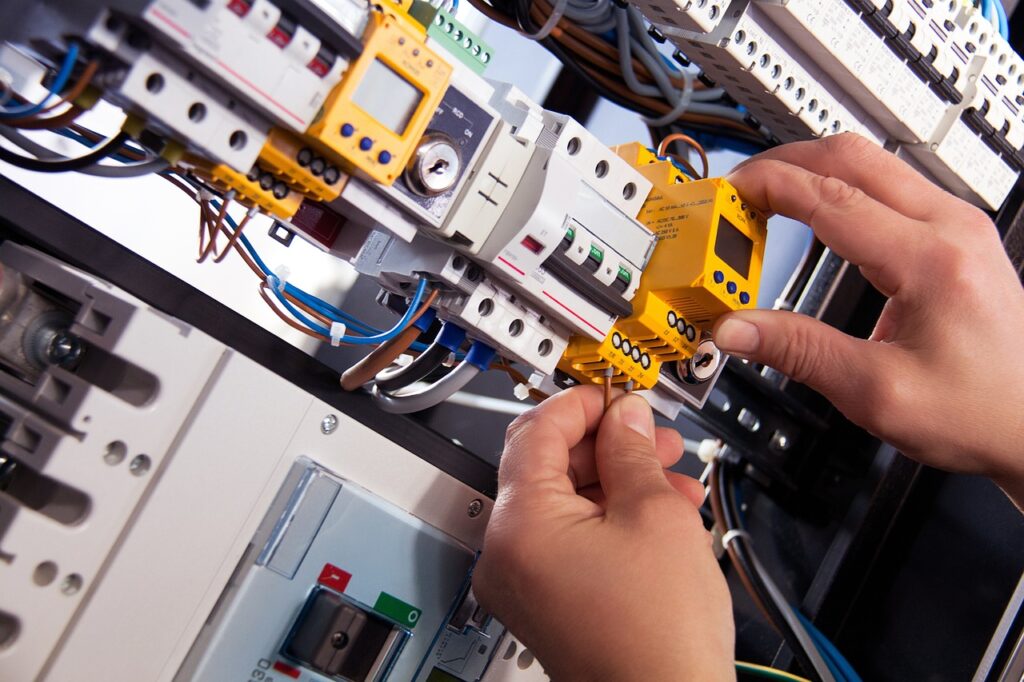
The history of the emergence of electrical engineering
As much as we can no longer imagine our lives without electrics or electrical engineering today, it started out small. It also marked the beginning of the triumphant advance of the electrician, without whom electrics would never have found a place in our lives. So let's take a look at where electrics and the electrician actually come from and how they have developed into what we know today.
Table of contents
- The history of the emergence of electrical engineering
- How did electrical engineering begin?
- How did electrical engineering and telegraphy come about?
- How was high-voltage current and the industry for it invented?
- What path did electricians take from tradition to modernity?
- Is it the tradition of the guilds?
- How will the leap to renewable energies and the smart home take place?
- What are the challenges then and now?
Estimated reading time: 12 minutes
How did electrical engineering begin?
Anyone who thinks that electrical engineering began in the 19th century is very much mistaken. While the idea that electricity and with it the electrical system developed around or after the year 1800 is obvious, the electrical system actually goes back a few hundred years further.
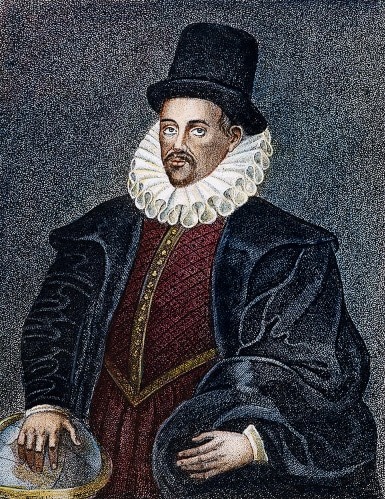
In the year 1570, that's right, fifteen hundred and seventy William Gilbert of electricity to enter the world stage. To this end, he built the first electroscope. He wanted to use it to investigate the properties of various materials. He was particularly interested in frictional elasticity.
Among other things, William Gilbert worked with amber, gemstones and glass. Rubbed amber had been known since the middle ages and William Gilbert discovered that gemstones and glass showed the same behavior when rubbed. He called the materials "electrics", because "elektron" was the Greek word for amber.
William Gilbert also observed the forces involved in friction. He named this "Vis Electrica". Then came the Italian physicist Alessandro Volta. Around 1800, he invented what we know today as an electric battery.
This was followed by a technical development that is still unparalleled. It includes the arc lamp, the Morse telegraph and extends via the telephone to the communication and information technology systems we use today. It was Siemens in 1879 who was the first to use the word "electrical engineering" for this development. He used this to propose the foundation of a separate association that could take care of further developments in this field.
How did electrical engineering and telegraphy come about?
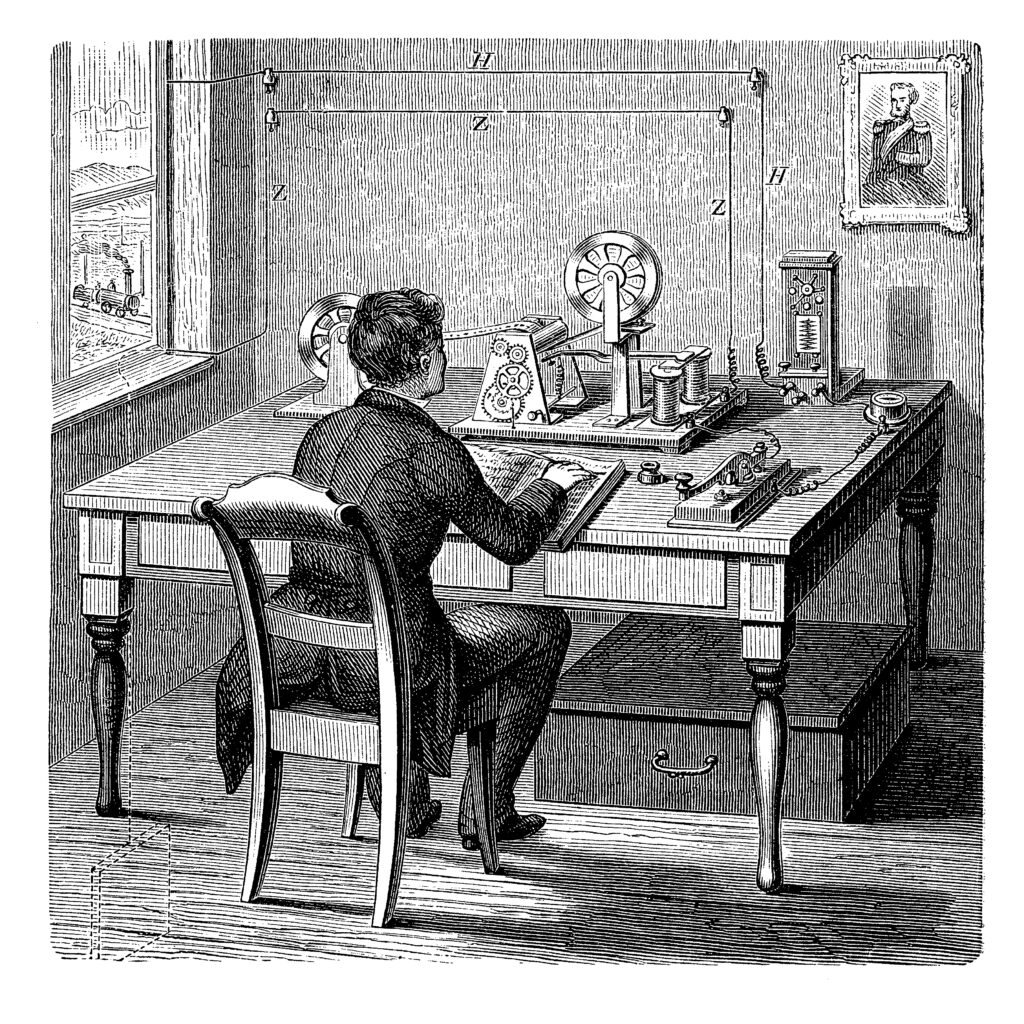
In the beginning, development was still limited by existing physical discoveries, weak power sources and the thinking of the time. As a result, the development of electrical engineering initially moved in the direction of telegraphs.
The available electricity was sufficient for this and telegraphs were not really anything new. They were already known as optical telegraphs, which enabled the rapid transmission of messages via line of sight. Here, electrical engineering extended the application by making it possible to transmit signals even without a line of sight, i.e. over longer distances and in all weathers and at night.
The advantages of this then new technology were initially offered to state users. It allowed administration to be accelerated and the military to be better coordinated. In addition, companies and private individuals with sufficient financial resources were able to afford this fast communication and benefit from the speed of information transmission.
How was high-voltage current and the industry for it invented?
Electrical engineering only gained industrial importance with the emergence of the high voltage current, which could be generated with better generators from 1880 onwards. This made it possible for electric motors, galvanoplastics and lighting systems to become increasingly important.
Arc lamps provided bright light in the streets and squares when night fell. Electricity in the houses now also provided a clearer view. The triumph of electrical engineering became really clear with the emergence of streetcars, which could be powered by electricity.
As early as 1900, various companies and well-known names were already active in the field of electrical engineering. In Germany, these included the companies AEG and Siemens. In Hungary, Ganz & Co. stood out, while in Switzerland the company Brown, Boveri & Cie. appeared on the scene.
Of course, the USA was not left out. Here it was Edison, Thomson and Westinghouse who dominated the playing field. There was also a dispute with them regarding the transmission systems. The issue was whether alternating current or direct current should be preferred. While development progressed very quickly, electrical engineering was created as an engineering discipline at German technical universities.
What path did electricians take from tradition to modernity?
Electrical engineering not only became established, it also made many conveniences of life and developments in industry possible. As a result, society became more and more dependent on electricity. However, this also meant that the skills of an electrician and the associated knowledge became just as important.
Electricity as an energy source not only provided the electricity that powered all the new miracle machines. It was also very dangerous by nature and had to be treated with respect.
This meant that with the spread of electrical engineering, people had to be able to handle electricity and its distribution and utilization systems accordingly. In addition to safety, it was also important that electricity was used efficiently in order to get the most out of it. This meant that the tradesman who was familiar with this had to work in two ways. He had to ensure that the electricity was used in such a way that it was not wasted and also in such a way that it did not endanger others.
These necessities gave rise to the new trade, which stood out from the other trades in that it worked with the new electricity. In the beginning, this mainly involved the installation and maintenance of lighting systems and the energy systems that supplied the lighting with electricity.
How has electrical engineering developed?
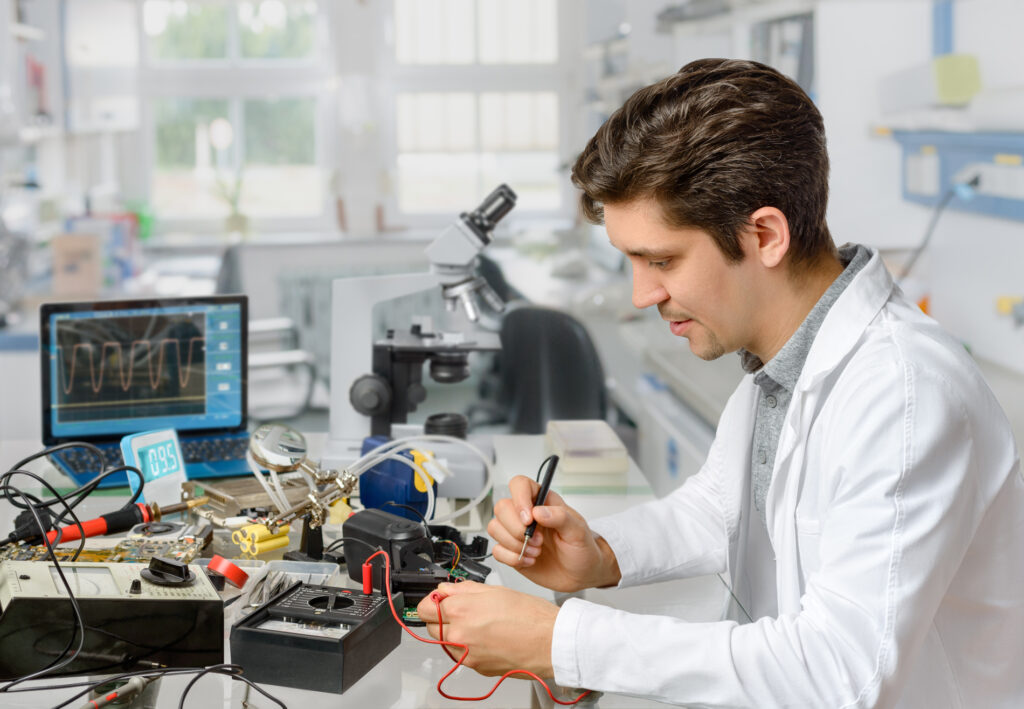
As electrical engineering continued to develop, so did the various areas of application. This also expanded the electrician's range of activities. While the initial focus was on lighting and energy supply, industrial machines soon followed. This was then joined by household appliances, so that electricians were increasingly in demand and the need to choose a specialization for the profession soon arose.
Electricians now all had to learn the basics of electricity. The next step was to keep pace with the rapid technological development. This was achieved by electricians choosing their specializations. The specializations were then refined and adapted to the new inventions. This in turn was taught to electricians in further training courses.
As a result, the profession of electrician quickly became a field in which learning never stopped. The content of the training courses had to be constantly updated and electricians themselves had to undergo new training courses in order not to be left behind by developments.
To this day, this constant updating of the profession is a characteristic part of being an electrician. From transistors to the smart home, this has allowed electricians to maintain their relevance and use new technologies safely and efficiently.
The work of electricians has been crucial in making modern social and economic life possible. They are the only ones who ensure that electricity is always available in the right way.
The electrician profession has also mastered the transition from the industrial era to the digital era. Today, electricians are able to deal with electronic and digital technologies. This means that they are still very important to our lives and must continue to undergo further training in order to keep pace with changing technology and developments.
Is it the tradition of the guilds?
The electrical profession has been influenced by the traditions and culture of the guild system (a historical network of trade associations that regulated training, standards, and practices among craftsmen). Even though electrical engineering only emerged after the era of the guilds, they still have their significance. Their guild symbols represent the quality of the work and trust in the craftsman, serving as a seal of craftsmanship.
Guild marks are associated with individual trades, and electricians often display them on their tools, workwear, and sometimes even on buildings. By showcasing these symbols, electricians demonstrate their expertise and wear them with pride.
How will the leap to renewable energies and the smart home take place?
To this day, the profession of being an electrician is dynamic and technologically oriented. In fact, it is even more dynamic and technological than ever before, especially today, when development is progressing even faster.
This is especially true with the ever-increasing digitalization of society. With smart homes, smartphones, computers, the internet and more, networking is becoming more and more widespread, meaning that electricity and electrical engineering are becoming increasingly important.
The electrician is at the heart of the action here, as he brings the electricity to the user and ensures that the appliances do their work correctly, efficiently and safely. So here too, progress is still dependent on craftsmanship and therefore on the work of the electrician.

What are the challenges then and now?
As development progressed, not only did the number of systems and devices increase, but so did the challenges that an electrician had to deal with. Whereas in the beginning the power supply of Morse devices and the transmission of signals was ensured, today it is all about robots and automation systems. At the same time, the voltage increased continuously, both in terms of power and work, which also constantly increased the safety requirements.
Today, the focus is on production plants, supply facilities, energy supply and all buildings - from single-family homes to factory buildings and airports. The power supply must be planned and ensured. Supply systems must be installed. Automatic systems, industrial systems, telephones and communication devices must be set up.
Electricians must be able to do this regardless of the device type, the building or the systems. Often enough, configuration can also involve programming the systems. An electrician must put them into operation and ensure that they function perfectly. What applied to street lighting back then also applies to complex devices at airports and much more today.
This means that electricians are always the people to contact when malfunctions occur or operations need to be improved or made more efficient. This includes testing, repairing and retrofitting the systems.
For all this, electricians need a good imagination and the ability to analyze complex systems. They need good hand-eye coordination to work with the sometimes small components of the devices. They also need to have a great sense of responsibility, as they work with electricity that is dangerous, devices that are very expensive and systems that are there to supply people with energy.
In order to meet these challenges, the standard training period for electricians is 3.5 years. This includes a journeyman's examination in two parts. The first part is carried out after the second year of training and the second takes place at the end of the training.
Electricians then gain experience and can specialize further. They also have the option of becoming a master craftsman, for example a master electrician in industry, or studying at university, which have already been mentioned here.
Conclusion
After its initial beginnings, electrical engineering developed primarily in the field of telegraphy. With the emergence of so-called high voltage current, it also spread to industry and from there increasingly to society.
The electrician was responsible for connecting, installing, maintaining and repairing the supply and lighting systems as well as the newly emerging devices. With the increasing importance of electronics, the electrician's field of work also expanded and many new specializations were added.
Even though the emergence of electricity and electrical engineering came after the end of the guild era, they still play a role as a seal of quality. This is why many electricians still wear the various logos that represent their guild. This is how they prove their professional skills and build trust with customers. New achievements such as smartphones and the smart home have opened up new fields of activity for electricians. As a result, the challenges have steadily increased over time. These are being met with ever-improving training and a professional examination, which prepare the new electricians for their tasks. Afterwards, the path to becoming a master craftsman or studying at university is open to them.
Similar topics