The offshore industry places extremely high demands - not only professionally, but also personally. Anyone working as an offshore engineer or materials engineer in shipbuilding is working in a highly specialized environment with complex projects, international teams and considerable responsibility. The market is tight for companies looking for such specialists. Temporary work offers direct, flexible access to the specialists they need.
Table of contents
- Soft skills and personal requirements for offshore engineers
- Everyday work: office, shipyard and sea in rotation
- Materials engineers in shipbuilding: an underestimated key discipline
- Tasks of a materials engineer in shipbuilding
- Why temporary work makes sense for offshore and materials engineers
- Request specialists now
Estimated reading time: 6 minutes
What soft skills and personal requirements are there for offshore engineers?
Offshore projects are costly, highly specialized and international. The choice of qualified engineers, employees and clients is correspondingly limited. This means that an offshore engineer inevitably works with people from different cultures and specialist areas. Those who are unable to communicate and coordinate slow down the entire project.
An offshore engineer in a managerial role must coordinate teams with different cultural and technical backgrounds so that the result meets the client's specifications - efficiently, on time and on budget. Strong communication and excellent negotiation skills are not just nice extra qualifications, but absolute prerequisites.
Further personal requirements at a glance:
-
- Sense of responsibility: Offshore technology has the potential to harm the environment. Environmental and safety standards must be consistently adhered to - even if clients are pushing for cost reductions.
-
- Resilience and flexibility: Assignments take longer than planned, overtime is part of the job, clients demand adjustments at short notice. If you can't deal with that, you're out of place.
-
- Travel and seaworthiness: Offshore engineers work on installations and ships. Severe seasickness or motion sickness is a reason for exclusion. Restricted mobility or chronic illnesses that are not compatible with offshore safety standards are also grounds for exclusion.
-
- Physical fitness: Evacuation drills and safety training courses have physical requirements - those who are unable to meet these are not allowed to be deployed.
-
- Shift readiness: Offshore assignments take place in shifts. The engineer is often away from home for weeks at a time.
What does the day-to-day work of an offshore engineer look like?
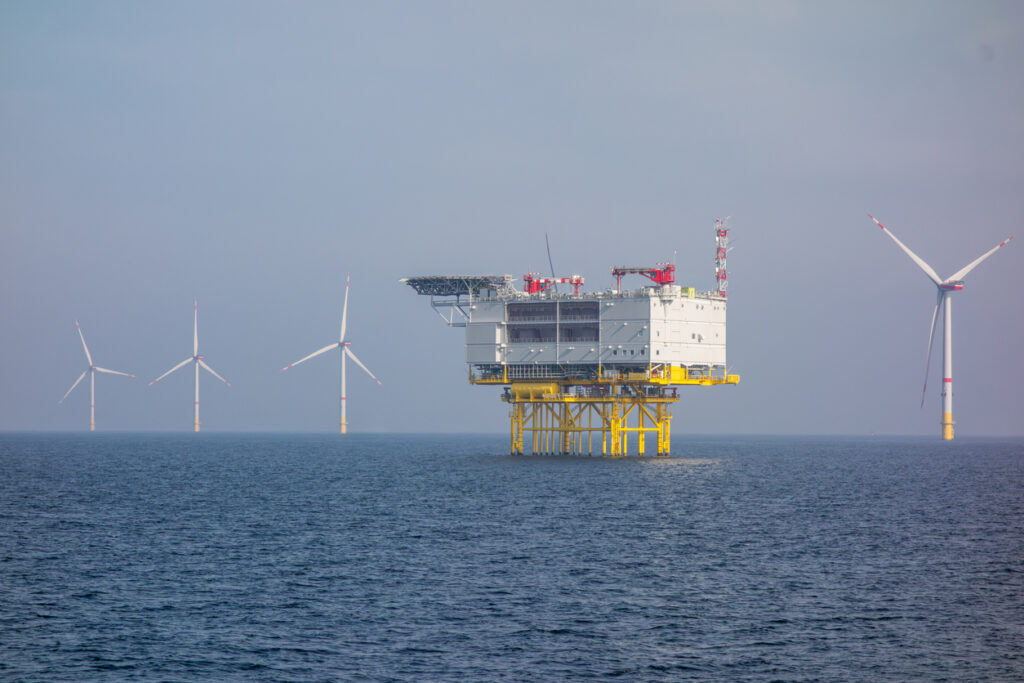
An offshore engineer does not have a fixed working environment. Office phases alternate with assignments in the shipyard or at sea. Office work includes planning, ordering components and all administrative preparations. In the shipyard, the focus is on monitoring assembly and construction - including troubleshooting and fault rectification. At sea, the focus is on maintaining operations and monitoring all ongoing work.
In practice, this often takes place in a 14-day rhythm: two weeks in the office, two weeks in the shipyard or offshore facility, then two weeks in the office again. Office hours correspond to normal working hours, while offshore assignments are carried out in shifts.
The financial remuneration reflects the requirements: newcomers earn between €50,000 and €60,000 gross per year. With five to ten years of experience in relevant projects, the salary rises to between €60,000 and €80,000 - €90,000 and more is possible in management positions or for foreign assignments, supplemented by foreign and risk allowances as well as project-related bonuses.
What do materials engineers do in shipbuilding?
In addition to offshore engineers, materials engineers are another critical specialist in the maritime sector. Their task: the development, selection and application of materials for watercraft and offshore facilities - with the aim of guaranteeing safety and durability.
Ships and offshore installations are exposed to extreme conditions over many years: seawater, which quickly corrodes materials, storms, wave loads, currents, the weight of the cargo and installed components, rain and temperature changes. No standard material can withstand this without careful selection and planning.
What are the tasks of a materials engineer in shipbuilding?
-
- Material analysis and selection: Materials engineers analyze the properties of various materials - from classic shipbuilding steel, duplex steel and aluminium to modern composite materials and alloys. The materials selected must be corrosion-resistant, strong enough and not too heavy at the same time.
-
- Material development: If there is no suitable material for a specific requirement, it has to be developed. Materials engineers work closely with research teams and take the extreme conditions of use into account.
-
- Quality control: Supplied materials and components are checked for compliance with standards and regulations. Manufacturing processes are also monitored - not only to ensure quality, but also to optimize processes and reduce costs.
-
- Process monitoring during installation: If dissimilar materials are not joined correctly, weld seams can fail under load - with catastrophic consequences. Materials engineers ensure that joints are made professionally.
-
- Innovation: Materials engineers are driving new technologies forward - such as the use of 3D printing in shipbuilding or the development of new composite materials for lighter, more resilient ship structures.
Why is temporary work useful for offshore and materials engineers?
Both offshore engineers and materials engineers in shipbuilding are difficult to find on the open market. The specialization is high, the requirements are high and the pool of available specialists is limited. For companies that need to plan on a project basis, temporary work is the most effective solution:
-
- Direct access to certified specialists: Offshore engineers with BOSIET, HUET and relevant qualifications - available without months of searching
-
- Project-related use: Personnel are deployed exactly when they are needed - in the planning phase, during construction or during commissioning
-
- International specialists: Materials engineers and offshore specialists from Poland, Romania, Slovakia and other European countries are available - with the necessary technical qualifications and language skills
-
- Legally compliant processing according to AÜG: All requirements under temporary employment law are fully covered by the temporary employment agency
Request specialists now
Are you looking for offshore engineers, materials engineers or other maritime specialists for your next project? We provide qualified specialists quickly, flexibly and with legal certainty - tailored to your project phases and requirements.
Similar topics