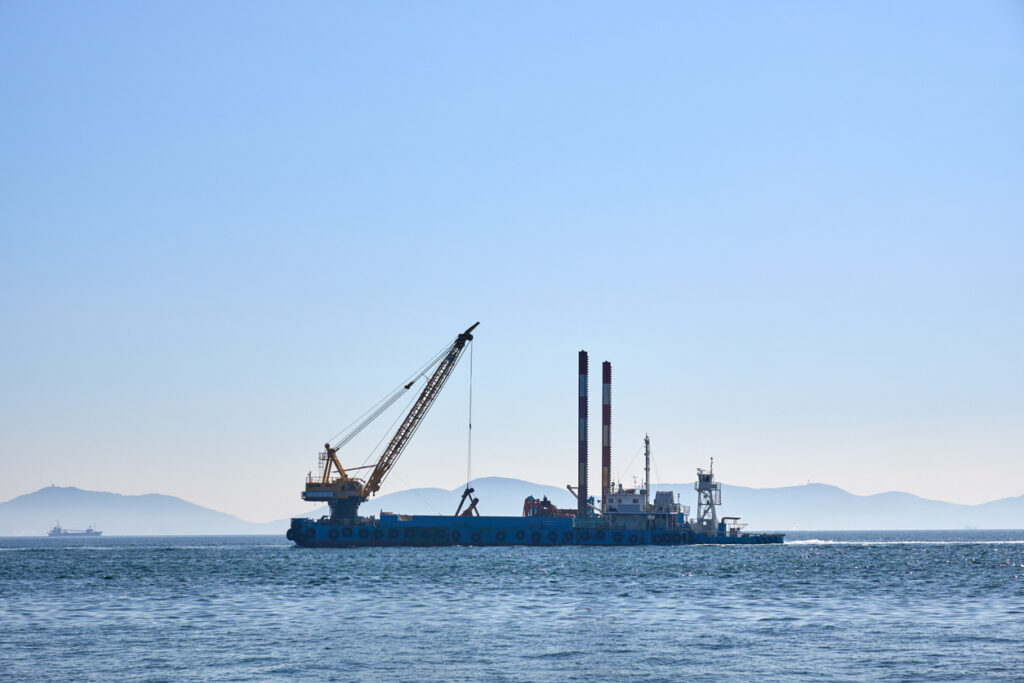
The offshore industry is booming. Wind farms on the high seas, oil and gas platforms, cable layers and installation vessels - all these facilities and ships need highly qualified specialists. However, the shortage of skilled workers is particularly noticeable in the offshore technology sector. Companies looking for offshore engineers, technicians and specialists face a real challenge: the projects are complex, the requirements are high and the available skilled workers are scarce. Temporary work offers a flexible and fast solution here.
Table of contents
Estimated reading time: 6 minutes
What are offshore facilities?
Offshore facilities are structures that are located off the coast in the sea and fulfill special functions there. The best-known example is wind turbines on the open sea - so-called offshore wind farms. But they also include oil and gas production facilities and converter platforms. The word „offshore“ simply means „off the coast“. The turbines are erected on fixed or floating foundations and make use of local conditions: strong, constant winds to generate energy or local deposits to extract raw materials.
Offshore wind farms do not consist of individual wind turbines - they comprise entire clusters of turbines that together produce considerable amounts of electricity. This electricity is transformed to the required voltage, frequency and strength by converter platforms and then transmitted to land via submarine cables.
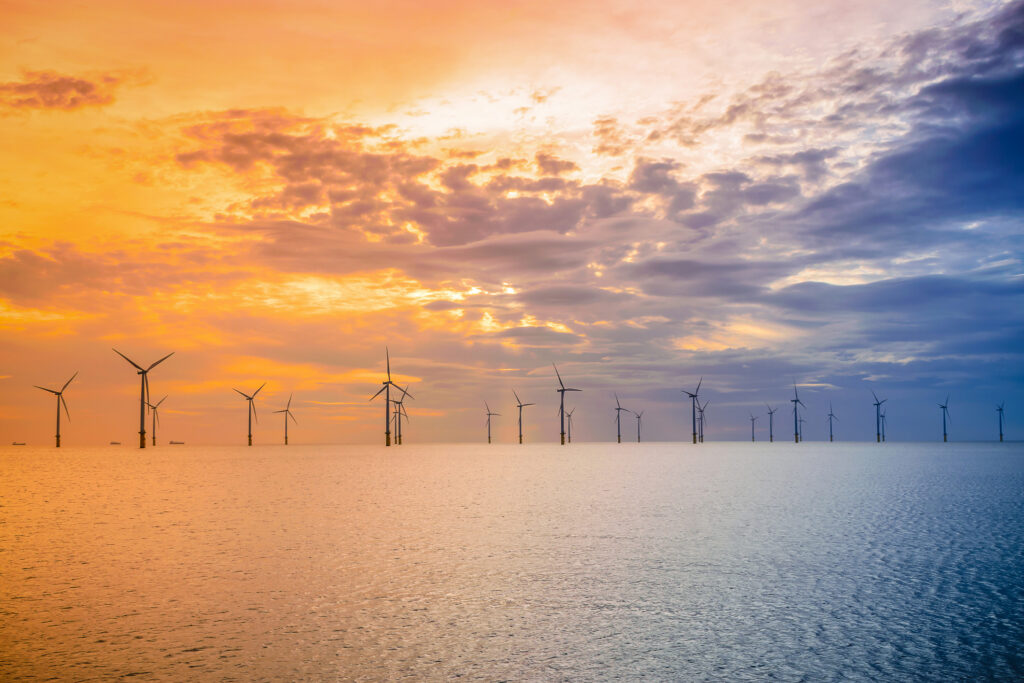
Depending on the depth of the water, the systems are either built on foundations that are firmly anchored in the seabed or they float on special structures. In both cases, the demands on materials, technology and personnel are enormous: permanent wave movements, currents, storms and the corrosive saltwater environment make extreme engineering necessary.
What are offshore vessels?
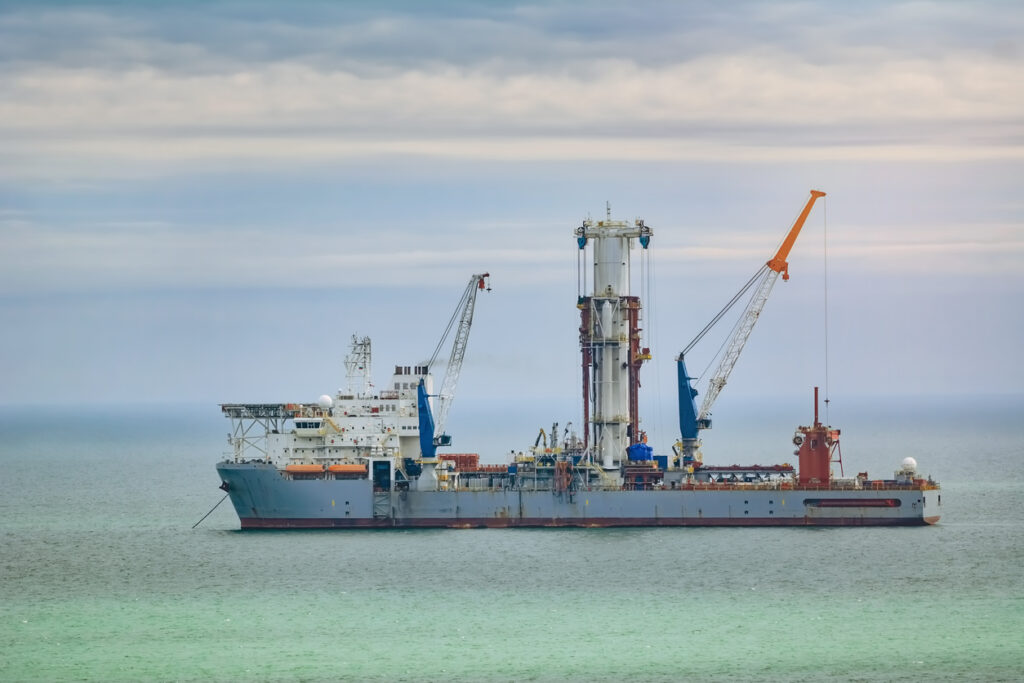
Offshore vessels are special ships that are built specifically for use around offshore installations. They are not standard merchant ships - they do not transport bulk goods and do not follow fixed routes. Instead, they are designed for extreme, highly specialized operations. There are several different types:
- Installation ships: They are equipped with heavy-duty cranes and serve as floating work platforms on which offshore systems are assembled and installed
- Supply ships: They transport equipment, materials and goods to construction sites and facilities on the high seas - far away from any traditional infrastructure
- Crew boats: You bring the staff to the facilities and relieve the shifts
- Cable layers: These ships lay the submarine cables that transport the generated electricity to the mainland
Offshore vessels are designed for maximum reliability and durability. They can withstand extreme storms and, thanks to dynamic positioning systems, can hold their exact position even without anchors - a technical feat that requires highly qualified personnel.
What does an offshore engineer do?
The offshore engineer is the key figure in the entire life cycle of an offshore installation. They plan floating structures and monitor their construction in the shipyard. He works closely with shipbuilding engineers and ensures that systems and ships both perform their tasks efficiently and withstand the extreme environmental conditions.
In detail, the area of responsibility includes
- Design and planning: The offshore engineer develops the design of the system or vessel, plans the ordering of all components and defines the processes for construction and integration
- Construction supervision: During the construction phase, he monitors all measures, intervenes in the event of errors and coordinates logistics and ship deployments
- Integration of special systems: Cranes, charging and supply systems, wind turbines or research equipment - the offshore engineer is responsible for their integration into the overall structure
- Safety and certification: All structures must meet maritime safety standards. This includes stability, ballast management, rescue systems and emergency technology. The offshore engineer checks whether all regulations for certification and permits have been complied with
- Commissioning and operation: Once the test runs have been completed, the offshore engineer commissions the system and is then responsible for maintenance, repair and smooth continuous operation
- Project management: Schedules, resources, bottlenecks and risks - project management is also part of the offshore engineer's remit
The income of an offshore engineer reflects the high demands: the average salary is €5,700 to €7,500 gross per month - depending on experience, further training, area of responsibility, industry, region and company. Collective agreements often play an important role here.
Why does temporary work make sense in the offshore sector?
Offshore projects can rarely be planned like a normal production process. Construction phases, maintenance work and commissioning follow their own schedules - often dependent on the weather and always capital-intensive. Companies need the right specialists at the right time: offshore engineers, welders, electricians, fitters and technicians with experience in the maritime environment.
Temporary work offers precisely this flexibility:
- Fast access to specialists: Instead of searching for months, companies can access qualified offshore specialists at short notice
- Scalability: Staff can be increased or reduced on a project-by-project basis - without having to take on long-term permanent positions
- Legally compliant processing: All aspects of the German Temporary Employment Act (AÜG) are covered by the temporary employment agency, including proof of qualifications and industry-specific requirements
- International specialists: The European market offers well-trained offshore specialists from countries such as Poland, Romania and Slovakia - with corresponding experience in shipbuilding and offshore technology
Which skilled workers are deployed in the offshore sector via temporary employment?
In addition to the classic offshore engineer, temporary work in the offshore and shipbuilding sector covers a broad spectrum:
- Naval architects and marine engineers
- Welder with qualification for maritime steels and special processes
- Electrician and mechatronics technician for ship and plant technology
- Pipe fitters and locksmith specialists
- Crane technicians and fitters for heavy-duty systems
- Quality assurance and certification specialists
Request offshore specialists now
Are you looking for offshore engineers, shipbuilding technicians or maritime specialists for your next project? We provide qualified specialists quickly, legally compliant and flexibly - tailored to your project duration and requirements.
Similar topics